WI Records at Pembrokeshire Archives & Local Studies
The Women’s Institute is the largest voluntary women’s organisation in the UK. Yet, the documents relating to them can easily be overlooked by people researching local history. As such, #EYAUnderrated is the perfect theme to discuss these records.
We have collections from sixty-five branches, some of which are no longer in existence. But thankfully, upon closure these have been deposited with us to preserve their accomplishments. Pembrokeshire WIs are overseen by the Pembrokeshire Federation of Women’s Institutes. They are based at WI House just up the road from us – which makes it convenient for them depositing records!
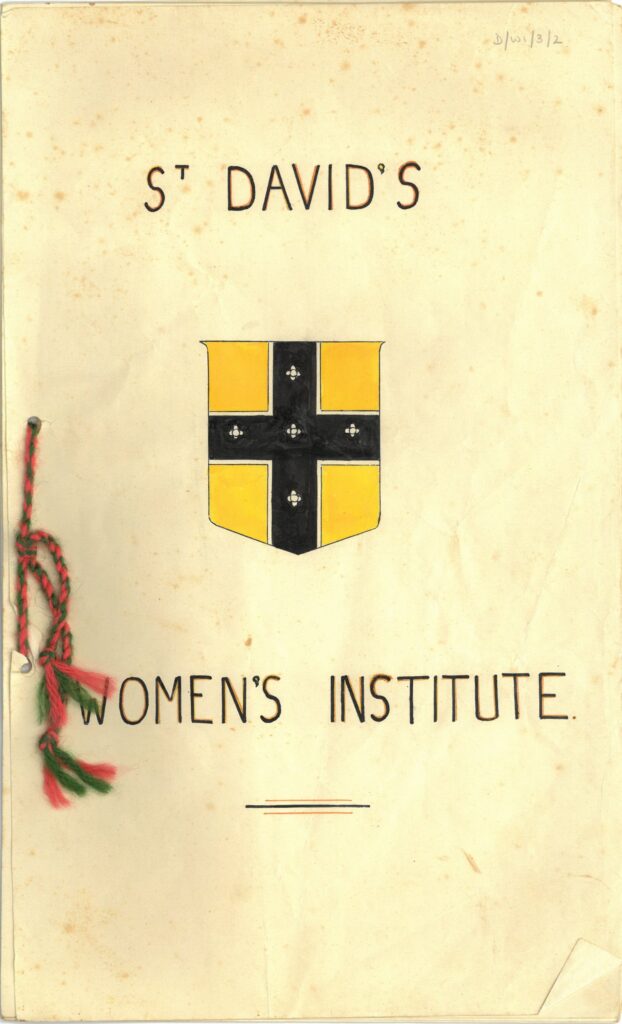
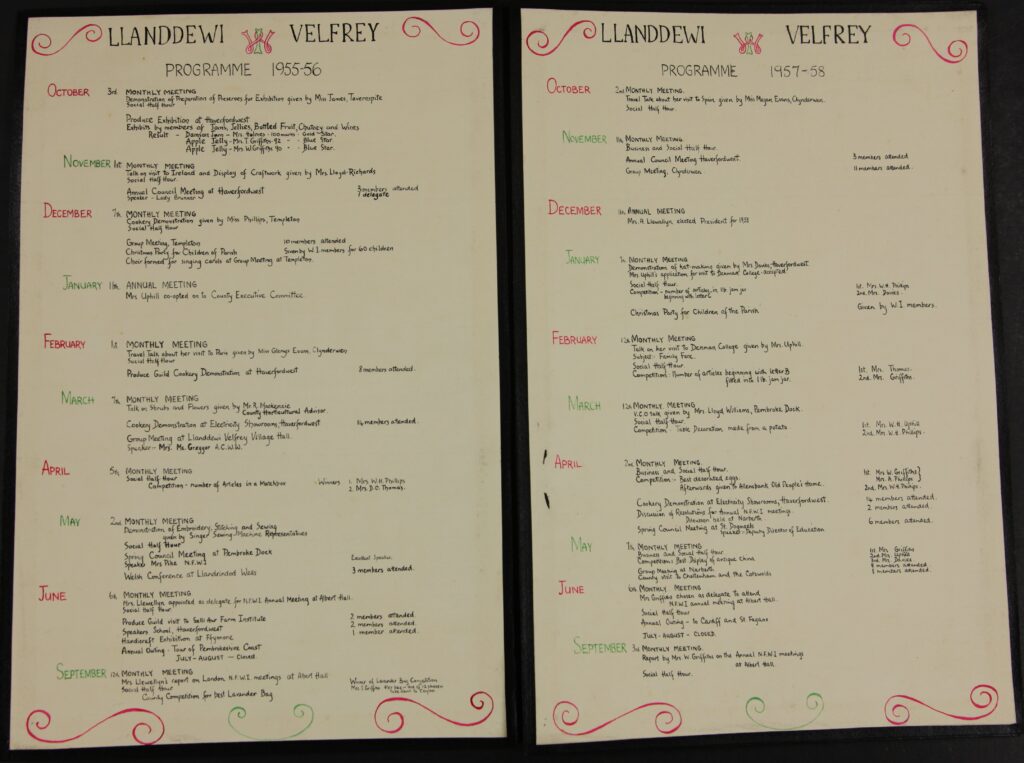
As you would usually expect for any organisation, we have minute books and account books, which document the administrative life of the Federation and its sub-committees, as well as each local branch. Admittedly, the thought of wading through these can be a bit tedious. Helpfully, some branches also produced programmes of their events. One for St Davids WI outlines their events between 1955 and 1958 (Image 1), showing meetings, county events attended, and achievements of the WI. In 1955 this included talks on Tudor Music, Herbs, and Nutrition. The following year saw a Produce Exhibition, a Cookery Demonstration, and a talk about laverbread. It was also a successful time for the WI’s President, whose lavender bag was chosen to represent Pembrokeshire and sent to Sri Lanka. Likewise, Llandewi Velfrey WI produced two panels showing the range of their activities between 1955 and 1958 as part of a scrapbook (Image 2). Using such records, researchers can then search local newspapers for any reports and photographs.
Pembrokeshire Archives
Pembrokeshire Archives
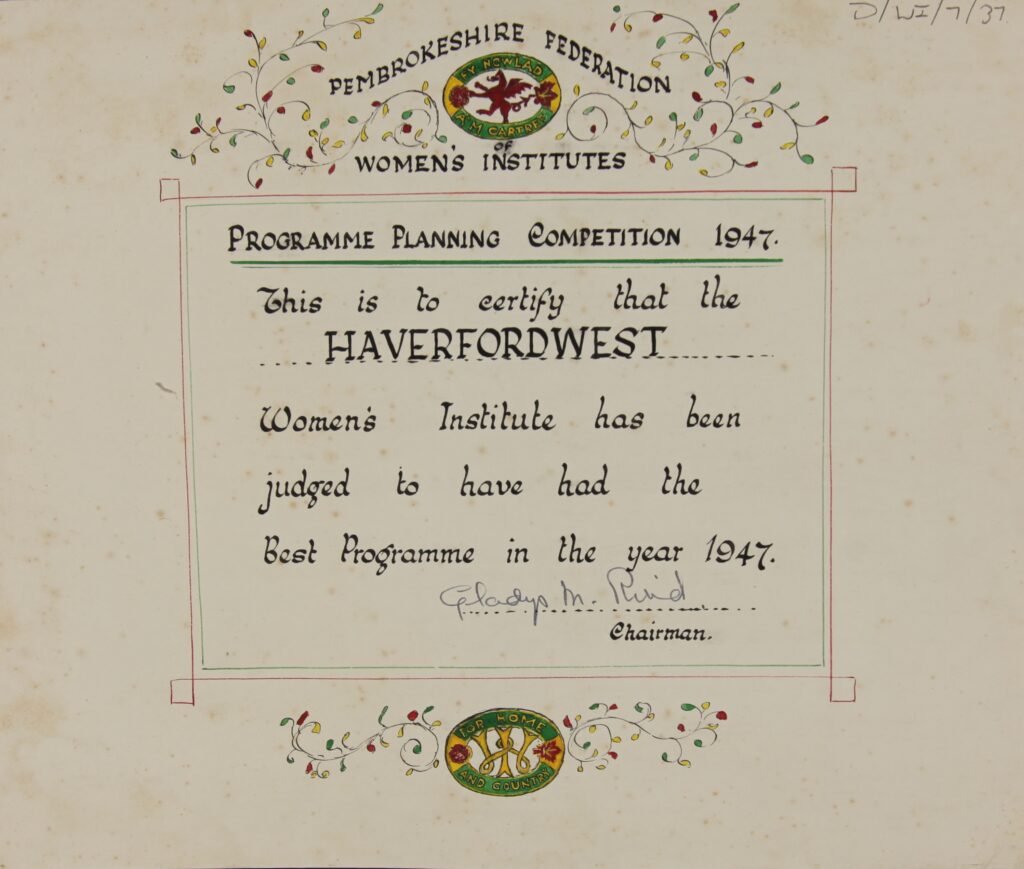
Other WI branches were similarly accomplished, as indicated by the inclusion of certificates. Haverfordwest WI for instance was presented with one to certify them as winners of the Programme Planning Competition in 1947 (Image 3).
Meanwhile, Wolfscastle were awarded Joint 1st for Recruitment in 1992, and 3rd in the 1996 Rose Bowl Competition before finishing 2nd in 2006.
Over the years, the Federation has set projects for the branches to undertake and consequently we have the work that they produced. In 1993 for example, there was the ‘Water in our Community’ project. Most opted to examine the history of wells in the area. Goodwick WI were awarded first place for investigating the fate of their old springs and wells (Image 4). They included photographs which were ‘particularly striking evidence of the way in which, all too easily, our water heritage becomes unthinkingly obliterated in concrete.’ Yet, simultaneously, in conducting such a project it showed ‘the persistence of a widespread local memory…that it takes very little to make local history come alive.’
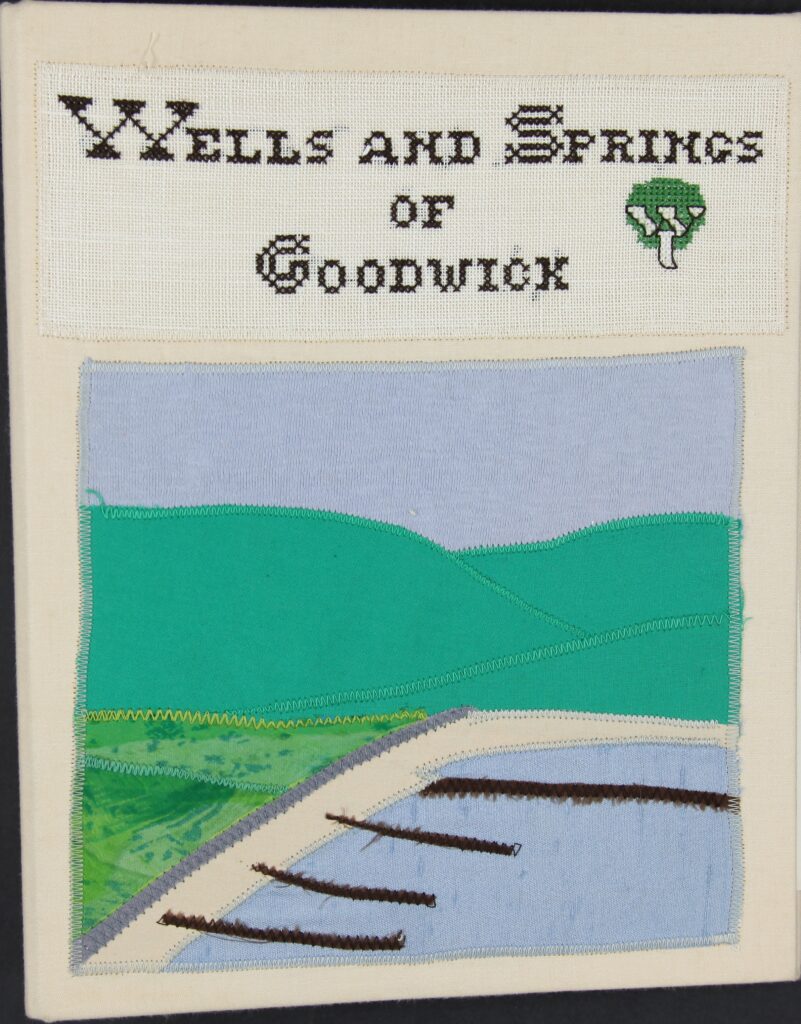
Image 4, ‘Water in our Community’ project, Goodwick WI
Pembrokeshire Archives
An appetite for historical research is further apparent with Solva WI who conducted a memorial inscription survey of St Davids, Whitchurch in 2008. Likewise, we hold a survey of inscriptions at Cilrhedyn church, 1981, as part of our Penwaun WI, Newcastle Emlyn records. We often get asked for the location of graves and burial plot registers. Usually, we have to direct queries on to the DFHS who have in the past conducted similar surveys, or to Parc Gwyn Crematorium who hold some information relating to civic cemeteries. The existence of these surveys therefore helps to locate what can be an otherwise elusive record.
The WI documents also point to the organisation’s importance in Britain’s national story. They emerged in the first place in 1915, in order to revitalise rural communities and to encourage women to become more involved during the First World War. As such, they were well-placed in the Second War World to contribute to the war effort. A copy of a circular addressed to the National Federation of WIs in May 1940 asked for their help in:
- growing cooking, and preserving food
- entertainment, education, and welfare
- making hospital supplies
- forming National Savings Branches
- salvaging
- distributing leaflets.
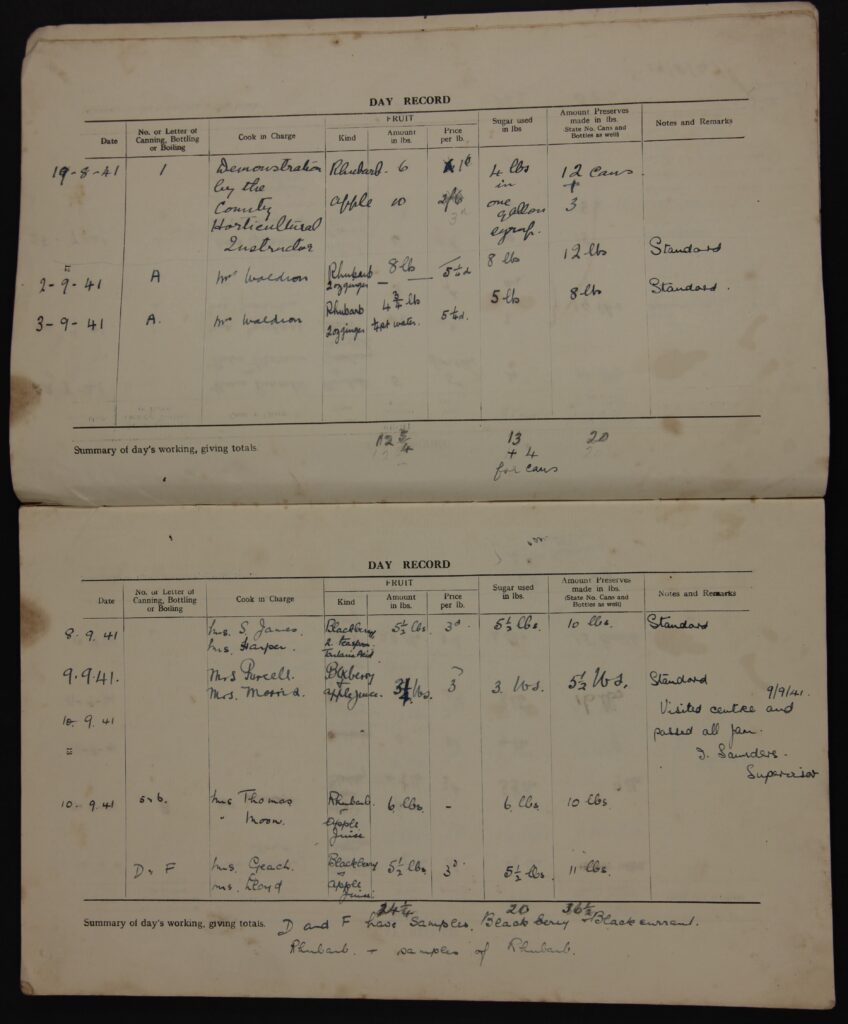
As part of Fishguard’s records we have a guide to Preserving Centres, which were established by the National Federation of Women’s Institutes in conjunction with the Ministry of Food. From surplus fruit and vegetables, they produced thousands of tons of preserves. The Day Record book of Fishguard Preserving Centre shows their contribution – listing the cook in charge, the kind of fruit, the weight, price per lb, sugar used, and amount produced in preserves (Image 5). A final column was also used to describe the resulting product’s condition. Meanwhile, correspondence as part of Mathry’s branch shows how much money they raised, and items of clothing made as part of the Pembrokeshire Comforts Association.
Pembrokeshire Archives
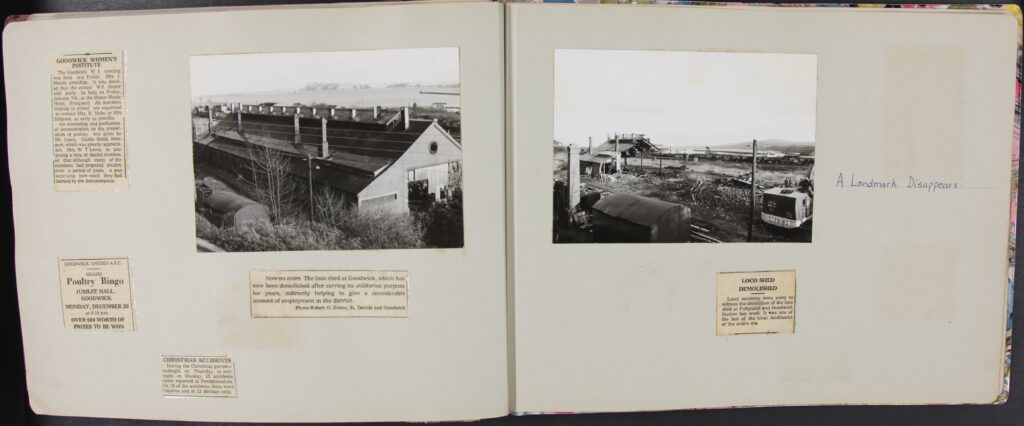
The highlights of any WI collection are the scrapbooks which are packed with information and insights into the local community. One for Haverfordwest in 1953 is comprehensive in its history of the town. Many take the form a of a diary, focusing on just one year in the life of the WI or the community. To celebrate their Golden Jubilee Year, Goodwick compiled a scrapbook showing the life of the village in 1965. Newspaper cuttings and photographs provide an idea of the events and changes witnessed, such as the demolition of the locomotive shed at Goodwick Harbour (Image 6). What would have once been an essential feature when the Harbour was opened in 1906, was surplus to requirements almost sixty years later. Another from their collection is a village diary from 1981, which recounts events, weather, and member activities month-by-month.
Pembrokeshire Archives
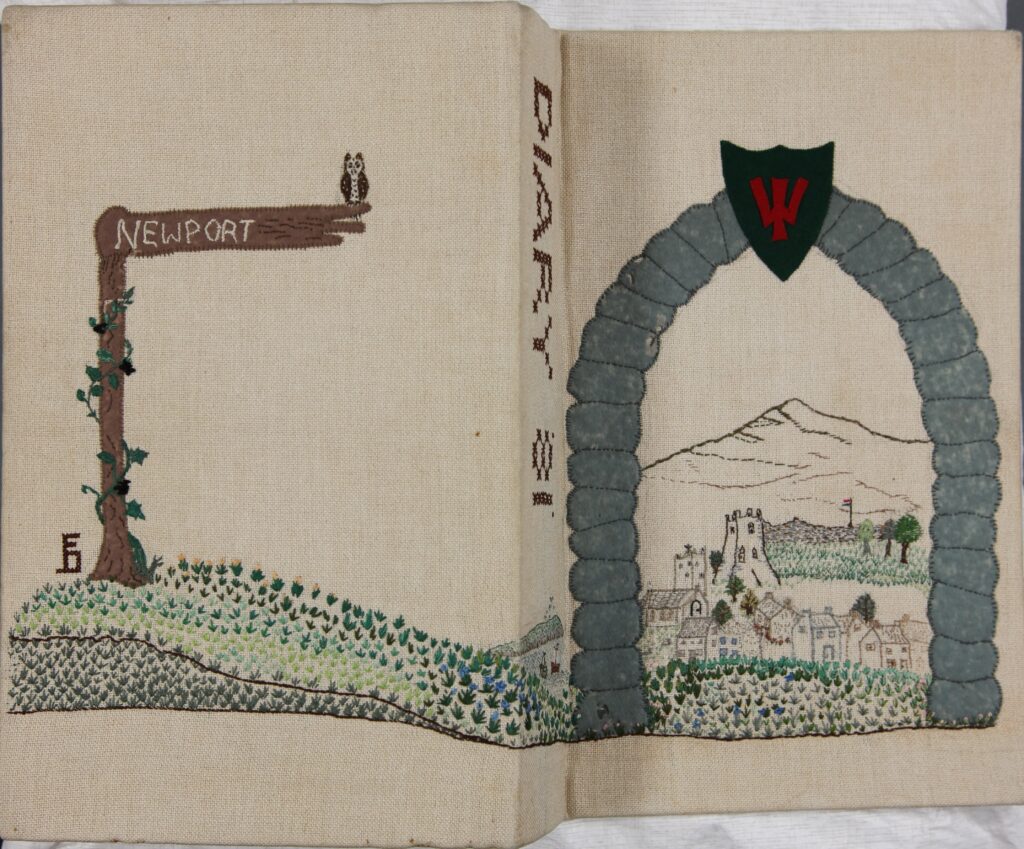
Such diaries and scrapbooks were a space for members to show their creativity and artistic ability. Nowhere is this more apparent than with the diary of Newport WI in 1981 (Image 7).
Pembrokeshire Archives
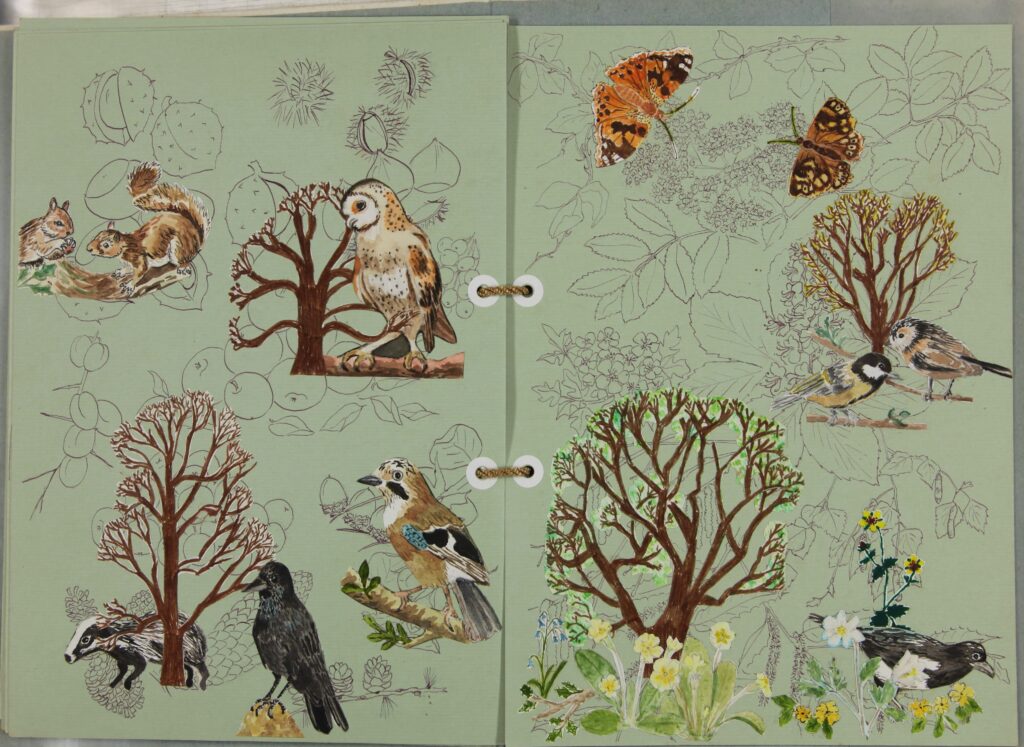
The cover itself is a piece of art. Within, notes on nature, energy, history, wildlife, and the national park are wonderfully illustrated. One scrapbook belonging to Penally WI focused on flora and fauna. Organised into field and hedgerows, seashore and dunes, marsh, and woodland, this captures the vibrant nature of the area (Image 8).
Pembrokeshire Archives
So too do those of Thornton WI (D-WI/8/7-10), which contain lovely sketches of birds, flowers, trees, and wildlife. My favourite would be the ‘Wildlife of Thornton’ volume, which provides coloured sketches and descriptions of animals such as hedgehogs, mice, and adders (Image 9).
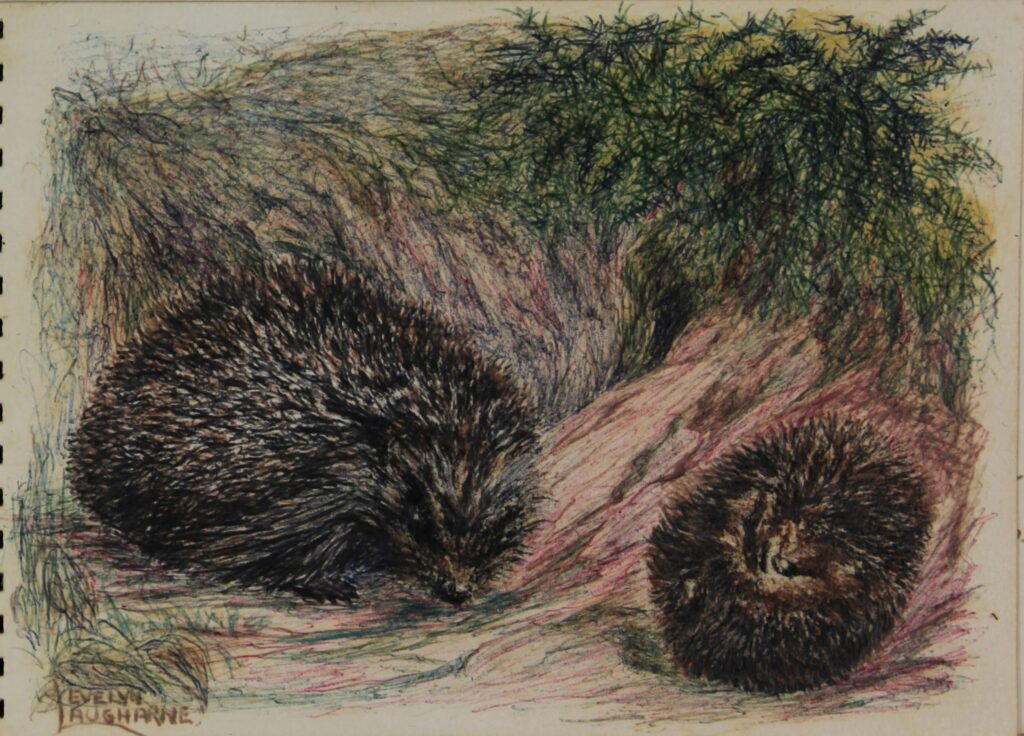
Pembrokeshire Archives
These were my first introduction to our WI collections – way back in March 2022 – and so I am probably biased in selecting these as my favourite WI documents. Exposure to these first, however, helped breakdown any notion that WIs were simply a social group for women of a certain age. Instead, it represented a starting point to realise the richness of their collections and their usefulness. Since then, I have not been disappointed.
Although some branches have closed over the years, WIs are still active in their community. Over the summer, Broad Haven & Little Haven WI were loaned a selection of their records for an exhibition. These consisted of scrapbooks from 1990-1991, 1992-1994, and 2000. Then, in September, we hosted members for a visit (Image 10). As well as a talk about the work we do and a behind-the-scenes tour, the group also got to see other items about their WI. This included the humungous volume entitled ‘A Local Society History of Broad Haven, Little Haven and District’, which was compiled by the WI around 1970. It is so large that the spine is bolted together! A typical page is shown here, consisting of photographs, newspaper cuttings, and research (Image 11). My personal favourite would be the photograph of Walwyn’s Castle Church with the caption, ‘We await a better photo’. Clearly this never materialised.
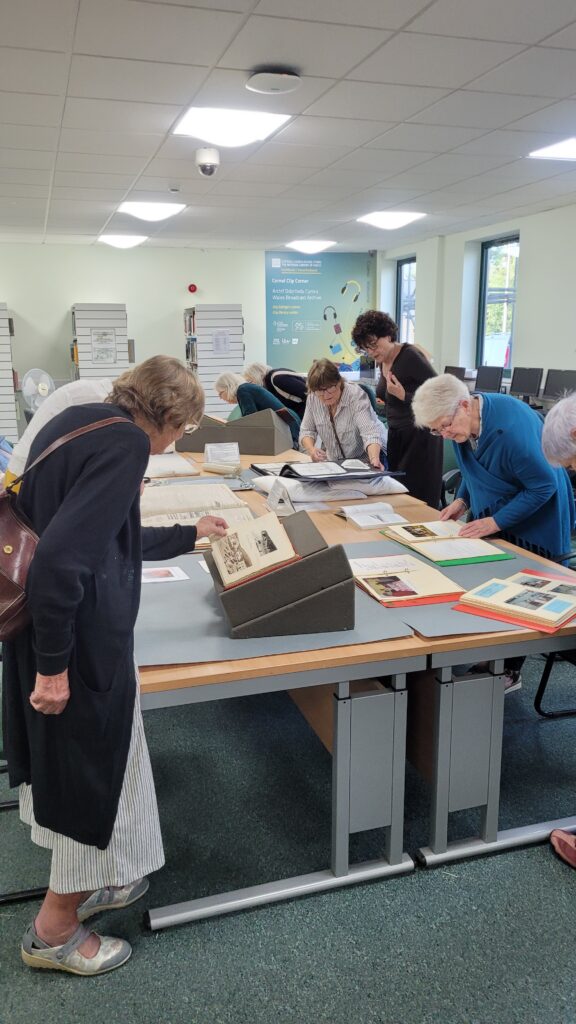
Pembrokeshire Archives
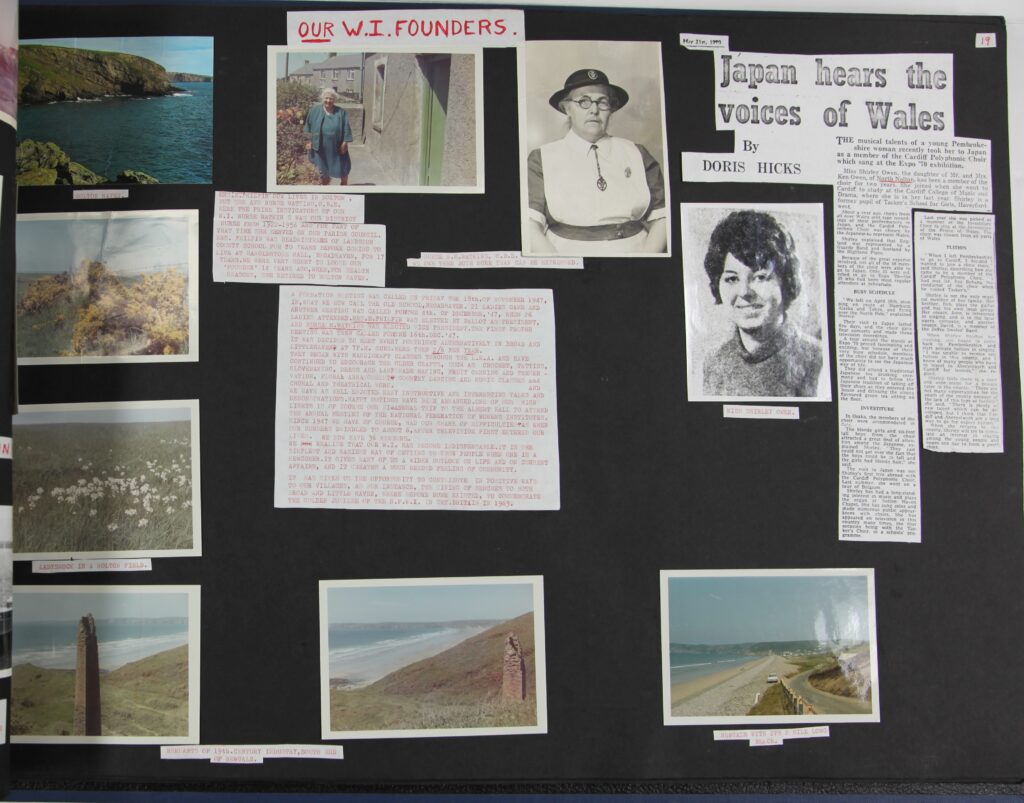
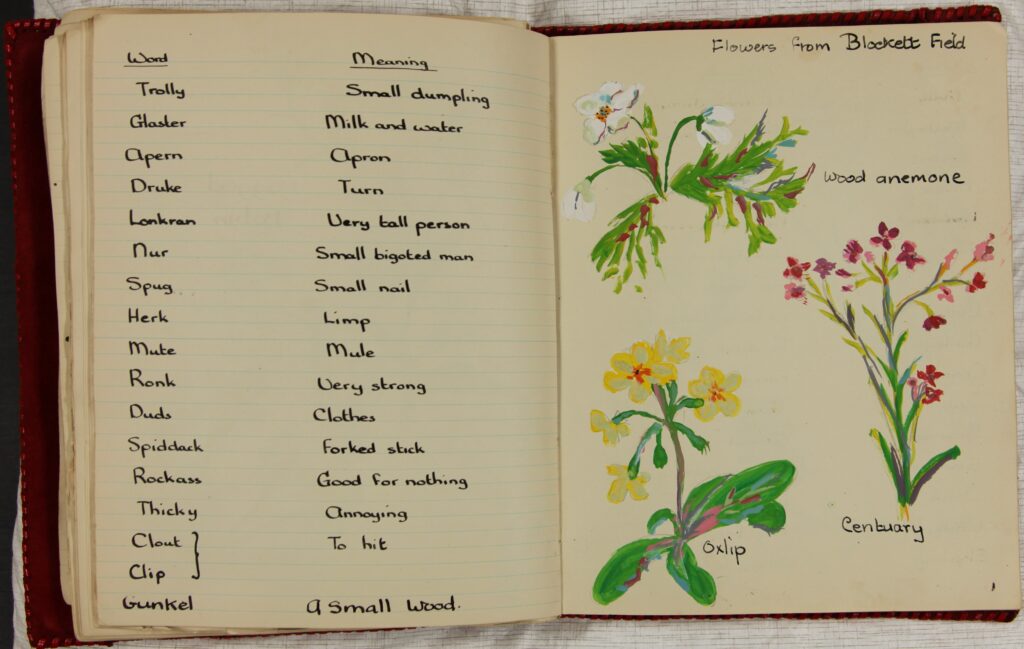
Another, compiled in 1953 (and much more manageable in size), features descriptions of the area, hand-drawn maps, illustrations, poems, and photographs. The last of these are especially great because they help to spotlight some of the most important people in the local area over the years, including the first schoolmaster, mailmen, and the builder of the Sunday School (with his dog) (Image 12). A list of local dialect alongside their meaning was also compiled, along with sketches of flowers growing in Blockett Field. Together, these help construct an idea of the sights and sounds of the past in Broad Haven and Little Haven (Image 13).
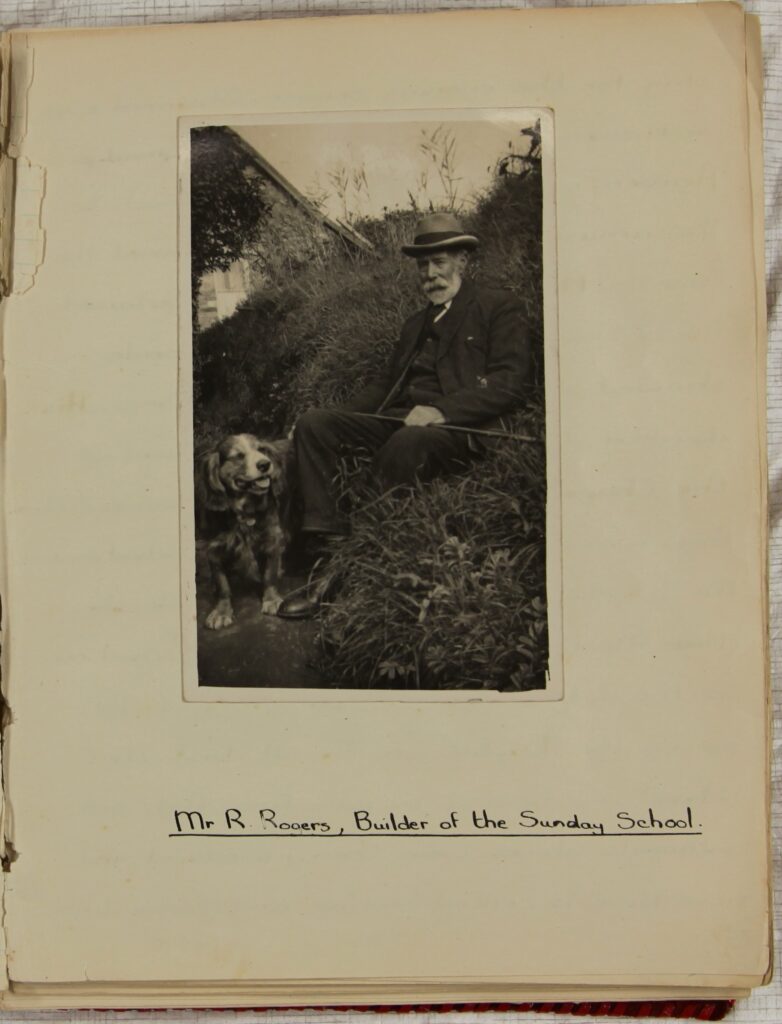
Pembrokeshire Archives
Pembrokeshire Archives
Despite their importance to local history and the diversity of their contents, our WI collections are sorely underused and underrated by researchers. Perhaps this is a reflection of the cataloguing process in that although ‘Scrapbook of X WI’ does do the job of describing it, this of course understates the wealth of material hidden within. But whether it is for something specific about a local community or a general browse to admire the handiwork, researchers will find something of use. Few collections in Pembrokeshire Archives & Local Studies show the endeavour, creativeness, and spirit of local communities as much as those relating to Women’s Institutes.