A three-generation family story through Gwent Archives’ collection:The first generation
My last post ended on the discovery of Fanny Vella’s case notes at Abergavenny Asylum and references to her father, George Klein, who was also a patient at the Asylum. George was born on 27th December 1827 in Frankfurt, Germany and was admitted into Pen-y-Fal on 26th June 1879 where he was a patient for 16 years, until his death in October 1895.
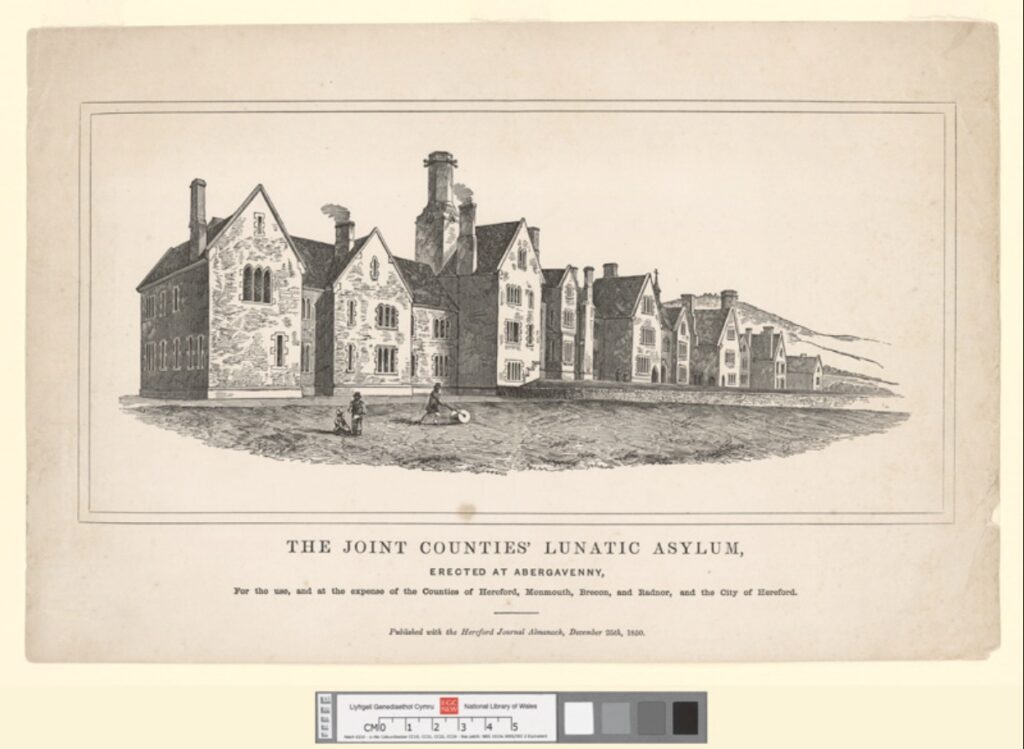
Pen-y-Fal Hospital, Abergavenny, also known as the Joint Counties Lunatic Asylum, was established in 1851 and was originally funded by Monmouthshire, Radnorshire, Brecknockshire and Herefordshire. Georges admission notes state that he had suffered an attack in 1862 of hemiplegia, likely a stroke, and was paralysed on the right-side of his body.
Interestingly, his notes also include a statement from an anonymous source which talks of George’s paralysis, but also stated “he is a very violent man […] I have witnessed acts of violence committed by him”. George’s violent nature was significant as his notes include that he was admitted to Pen-y-Fal “from [the] town hall Newport being lodged there under a warrant for assaulting his wife”. The Town Hall in Newport had cells attached and is likely George was waiting for trial when he was admitted to Pen-y-Fal.
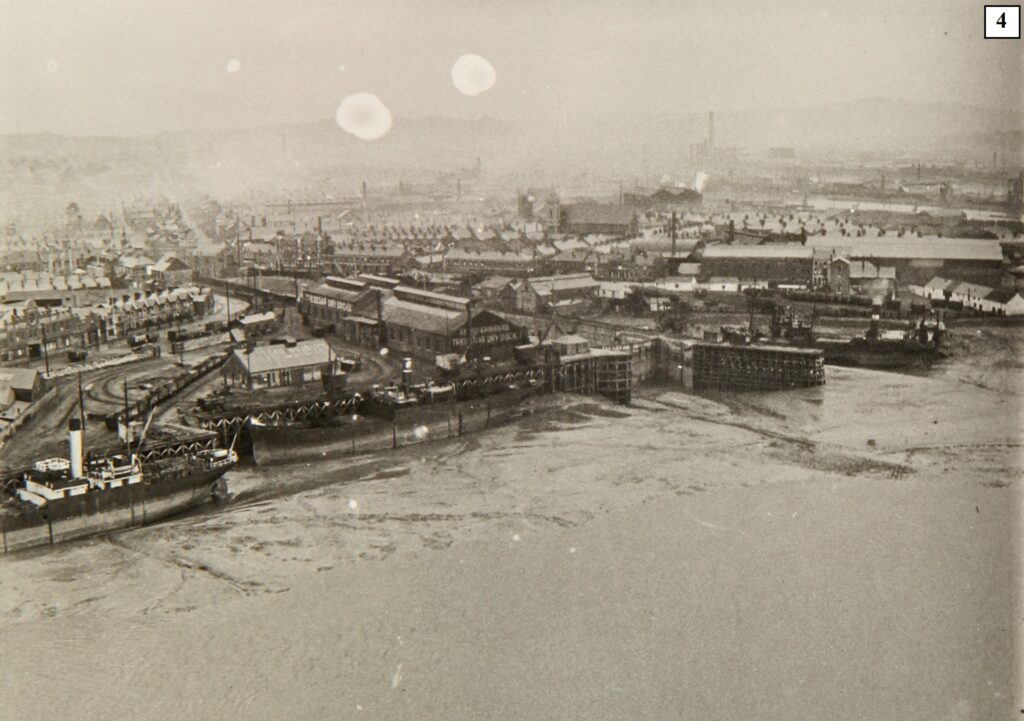
Prior to his admittance to Pen-y-Fal, it seems George had travelled with his wife, Jane Gibson and five children to Newport, likely drawn by the potential of work at the Newport Docks. In the census from 1861 and 1871, George’s occupation is listed as a Ship Brothers Clerk, Ship Broker and Interpreter and at this time the family were living very close to Newport Docks, in Pillgwenlly. The nineteenth-century was a period of huge growth for Pillgwenlly, and Newport, with the growing demand for a local port to transport coal and iron from the South Wales valleys. This century saw the extension of the Monmouthshire Canal to Newport and Pillgwenlly, as well as the development of numerous docks in Newport – Town Dock (1842), Inner Basin (1858), Alexandra Dock (1875), and South Dock (1893).
We will publish the third part of this story (‘The second generation’) on 24.06.26