North East Wales Archives (Hawarden)

We collect historical records relating to North East Wales, and preserve them for future generations. We hold a wide range of original records, including registers of baptisms, burials and marriages, newspapers, photographs, maps, court records, deeds, trade directories and more. Our records date from the twelfth to the twenty-first century.

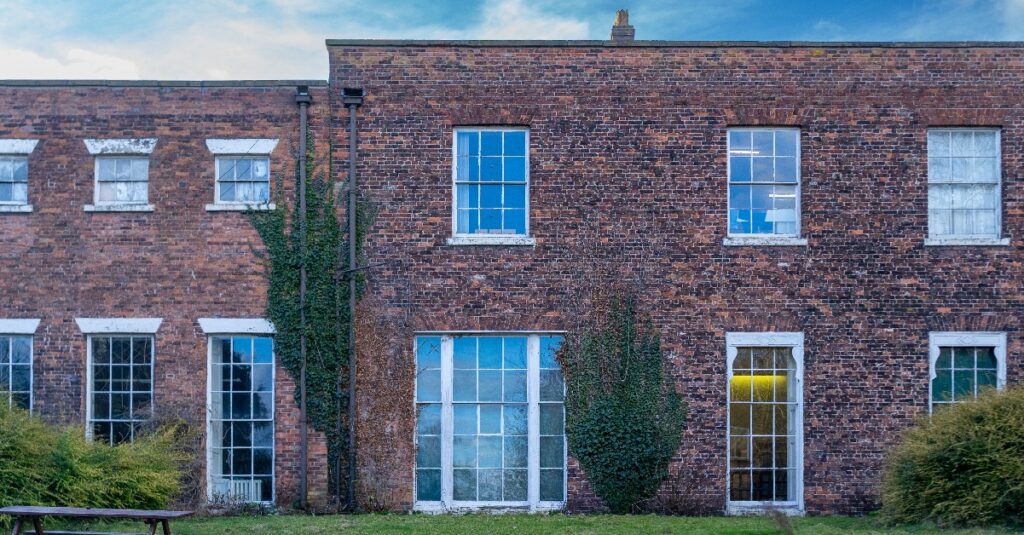
North East Wales Archives (Hawarden), The Old Rectory, Rectory Lane, Hawarden CH5 3NR

Opening Hours

Monday, Tuesday and Thursday: 09.30 – 16.30

Items from North East Wales Archives (Hawarden)

  1. North East Wales Archives (Hawarden)

    Illuminated letters patent of Mary 1, 1554

    At NEWA, Hawarden, we hold this beautiful illuminated Letters Patent, issued by Mary I on 9th May 1554. It relates to land in ‘Grauntesmore by the sea, Flintshire’; and Garnethwen in the parish of Skiviock, [Ysceifiog], Flintshire.  Lands in Flintshire were granted to John David ap Griffyn ap Llewelen, gentleman, for the sum of £101-13s-4d, subscribed by Sir John Godsalve as clerk of the signet.  It is signed above the initial letter: ‘Marye the quene’, and contains an impressive portrait of Mary, her loose hair representing her virginal state, enthroned on a massive ochre-coloured throne with crown, orb and sceptre. The upper margin of the document is decorated with heraldic devices including the pomegranate and Tudor rose emblem of Mary on a ground of flowers.  The great seal of Mary I is pendant on laces of green silk and silver thread at the bottom of the document. We were very lucky to receive a grant from the MLA/Victoria & Albert Museum’s Purchase Grant Fund to buy this wonderful item in 2012; a further grant was also given by the Friends of the National Libraries, London.

  2. North East Wales Archives (Hawarden)

    Records of the Jack Evans Amateur Pantomime Company, Deeside

    Records of the Jack Evans Amateur Pantomime Company are held at NEWA, Hawarden. A dynamic local theatre company which was in operation between 1929 and 1942, they performed extensively in the North-East Wales area, spanning Connah’s Quay, Shotton, Mold, Holywell, Bagillt, Prestatyn and Rhyl.  The Pantomime Company was begun by Jack Evans of Shotton, with a large cast drawn from local people in the North Wales area. He joined forces with the Noakes family, who had considerable prior experience in the theatre. The two families were entwined more closely when Jack married Winifred Noakes in 1933. Jack Evans was the writer, producer, director and a part-time actor in the Pantomime Company whilst Winifred played principal roles in almost all of the productions. Many cast members lived in Fron Road and the surrounding streets in Connah’s Quay; others were employees of Shotton Steelworks and Courtaulds’ textile factories. After many acclaimed performances and touring productions, members of the cast were called up into the armed forces during the Second World War, which sadly marked the end of an era for Jack Evans’ amateur pantomime company.

  3. North East Wales Archives (Hawarden)

    Records of St Clare’s (RC) Children’s Home, Pantasaph and Associated Schools

    Records of St Clare’s Children’s Home and the schools which were attended by inmates of the children’s home, are held at NEWA, Hawarden. Children were required to be of the Roman Catholic faith and often came from far afield places such as Liverpool and Manchester.

    In 1904, the Vahey sisters, Esther aged 10, Agnes aged 7 and Ellen aged 5 were all admitted to the school at Whitford, as children from St Clare’s Children’s Home. They were children of John and Jane Vahey of Birkenhead, a Roman Catholic family. When the girls came into the Children’s Home, their parents were still alive, so they were not orphans. However, newspaper articles reveal a sad story which shows why they could no longer stay in the family home. Their father, John Vahey, had brutally assaulted their mother and faced prison. He later went into the Workhouse and their mother sadly died in 1915, possibly never seeing her children again.  

    A search of the admission registers and other records can yield many stories about the lives of children who were placed in the children’s home, their family backgrounds, circumstances and the events which lead their parents to place them in an institution far away from their homes and families.

  4. North East Wales Archives (Hawarden)

    Estate maps were usually drawn up by professional surveyors employed by landowners, who wanted a record of exactly how much land they owned; where the boundaries were located; and how much their land was worth. For the researcher, they are invaluable sources of information and are often accompanied by a book of reference which can give further details about tenants, field names and types of land use in a local area.

    This beautiful example of an 18th century estate map shows lands lying in the parish of Northop, Flintshire, belonging to the Rt. Hon. Other, Earl of Plymouth, in 1717. Other Windsor was the 2nd Earl of Plymouth, who served as Lord Lieutenant of Denbighshire and Flintshire from 1713 to 1714.  In 1705, he married Elizabeth Whitley, the daughter of a prominent Flintshire family from Aston Hall, Hawarden. The lands and properties belonging to Elizabeth were transferred to her husband on marriage, therefore he owned substantial estates in Flintshire including the lands shown on this map, in Northop. The detail is very fine, with representations of houses, farm buildings and the church of St Eurgain and St Peter in the village centre. The rich gold leaf detail on the legend and compass rose shows that no expense was spared in the making of the map, which was drawn up by the surveyor William Burnham of Wallington, Oxon.

  5. Recipe Book belonging to ‘John Dawson the younger’

    This pocket-sized ‘recipe’ book was handwritten by John Dawson, a farmer from Gronant, Flintshire, around the 1800s. At a time when there were no vets, farmers relied on tried and tested folk methods to cure their livestock, which were passed on to friends and neighbours. The book contains advice on treating animal illnesses, with interesting ‘cures’. To cure cattle of ‘red water’, it suggests: ‘give the Beast one Pint of Gin’. There are also remedies to rid crops of diseases such as ‘Smut in Wheat’ and hints to drive away destructive slugs!